Otterwise
An app concept that helps children understand dementia in a simple, playful way – and stay connected with relatives who live with it.
- Course
- Design of Human Machine Interface
- Semester
- WS 2024/25, TH Ingolstadt
- Team
- Maria Dörfler, Kristina Bojatschkin, Senta Kurz
- Tools
-
Challenge
How can modern technology support people with dementia to live a good quality of life?
People with dementia experience challenges in everyday activities and day-to-day routines due to cognitive impairment. It affects their independence and autonomy and can result in social isolation, loneliness and chronic conditions.
Research
To understand the topic from different perspectives, we combined four research methods. Our stakeholders: people with dementia, their relatives and family, caregivers and health care practitioners.
-
Podcast
We listened to the “Demenz Podcast” by Christine Schön, focusing on the episodes about diagnosis, communication and everyday life.
-
Web
We researched dementia online to better understand its causes, symptoms and impact on those affected, as well as the importance of early detection and support.
-
Expert talk
Anelise Golin Stampfer from the Alzheimer Gesellschaft Ingolstadt e.V. gave us a talk about dementia on October 15th.
-
Interview
We talked to a woman who has worked in a residential care home and nursed people with dementia. She shared insights into the emotional and physical demands of providing care.
Concept
An app that explains dementia to children – and gives them ways to interact with their grandparents.
Otterwise explains the condition in a child-friendly manner and offers games and activities that children can do together with relatives who have dementia, fostering communication and empathy. Through these experiences, children learn how to respond to the challenges that come with dementia.
We discussed the idea with Ms. Stampfer and received positive feedback.
Personas
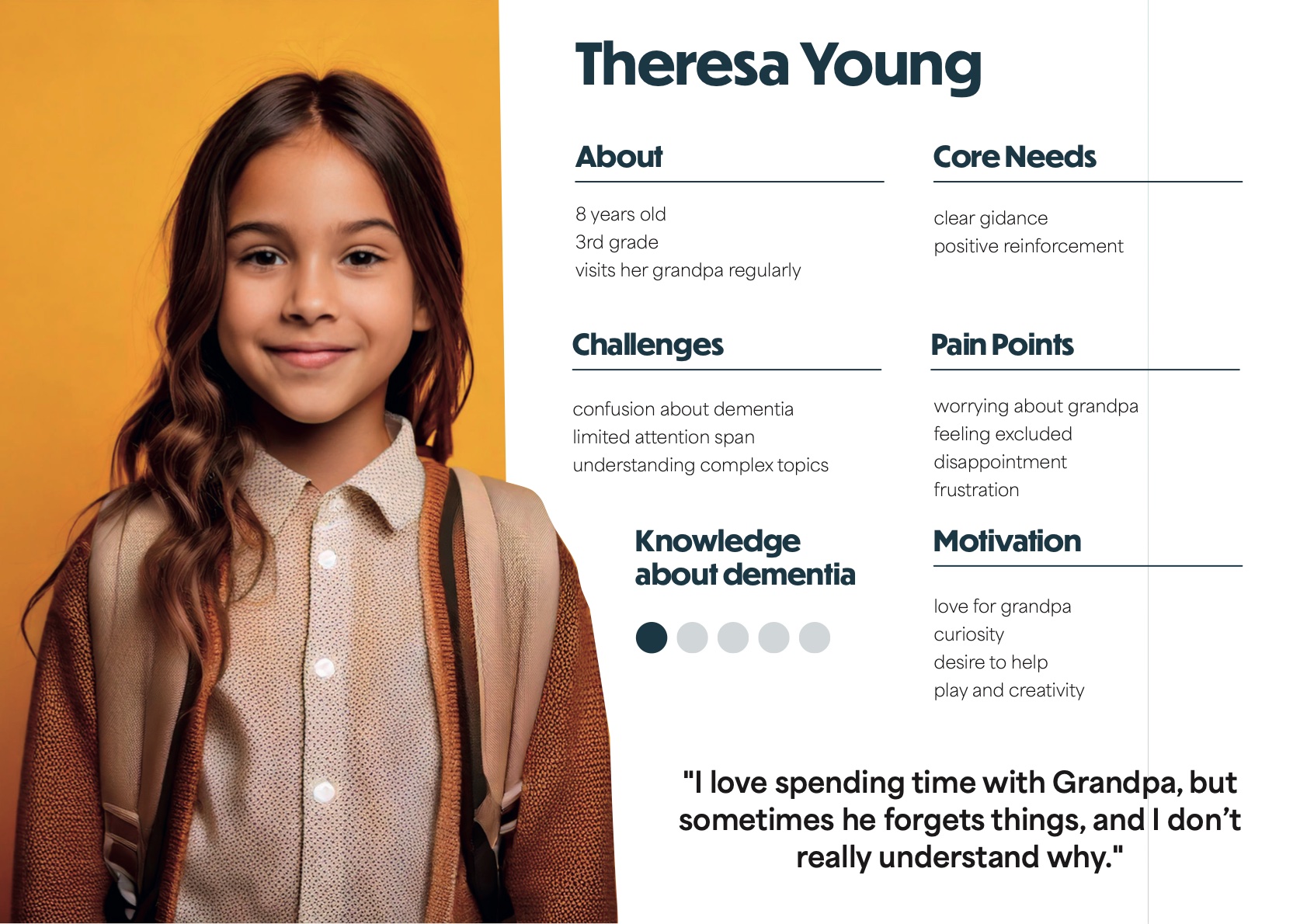
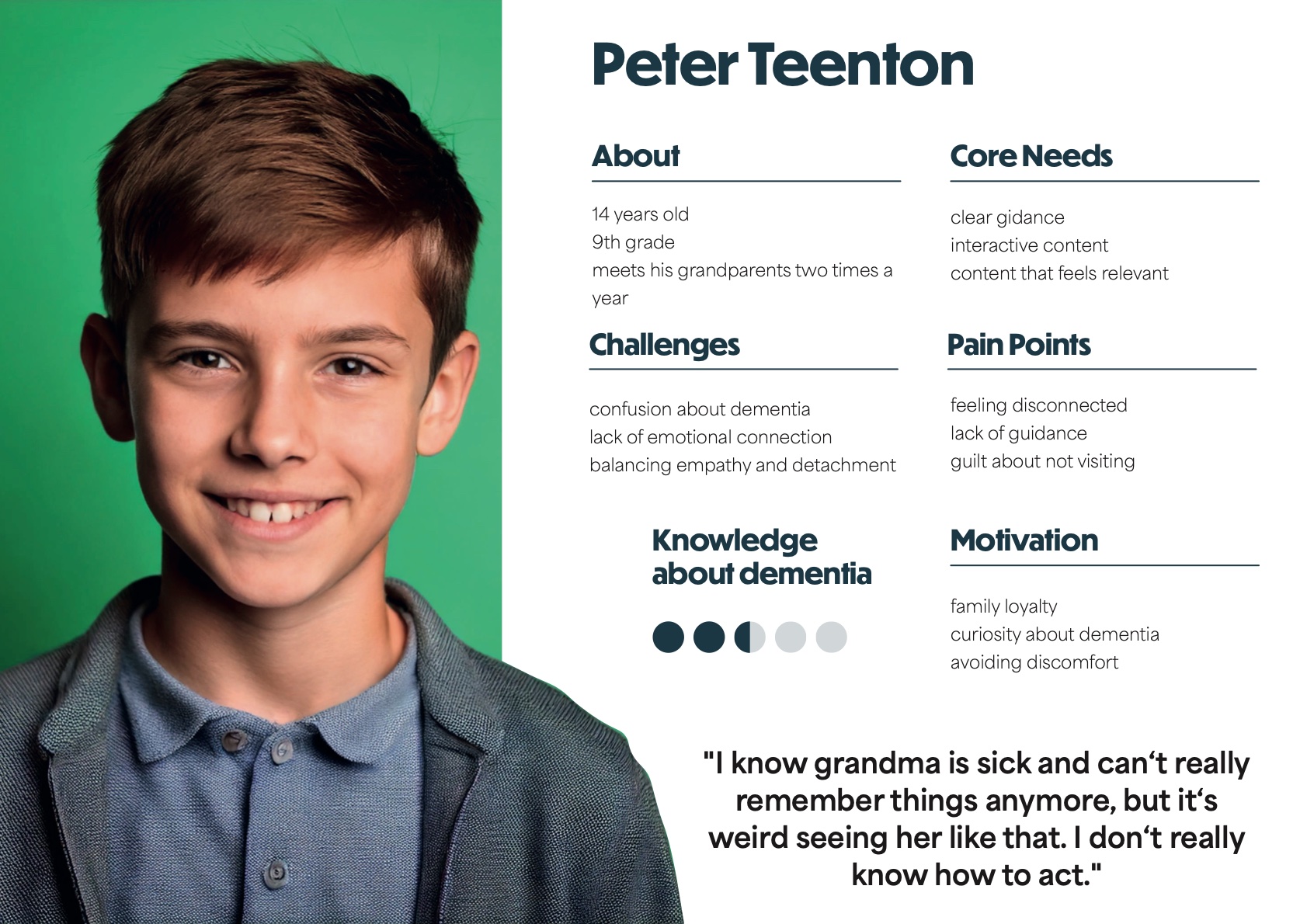
Based on our research, we defined three personas: two children with different relationships to their grandparents, and a grandfather living with dementia.

Prototyping
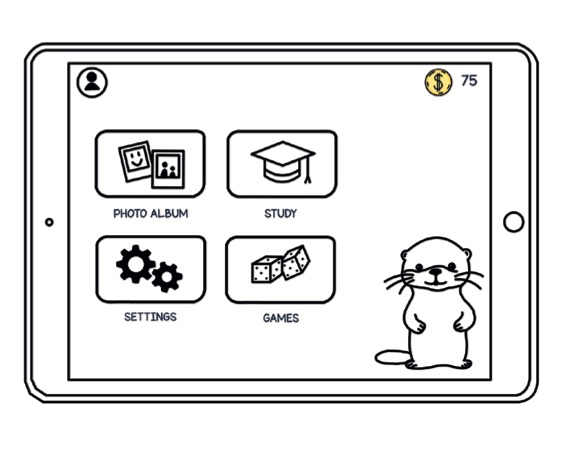
A paper prototype was our first, low-cost step to visualise the layout and test its functionality. A user test provided valuable feedback for improving the design before moving on to more advanced stages.
We then built wireframes in Figma to map out the interface and define the flow in a more detailed and interactive way.

Visual Design
The wording should feel easy, lively, motivational, playful, encouraging, friendly and joyous. A style guide with colours, typography (Itim) and button styles keeps the interface consistent.
- #EB5D6F
- #319ED9
- #F6C222
- #94C671
- #7C5112
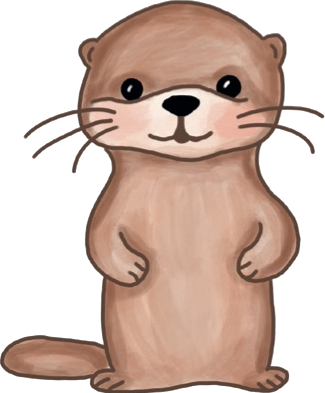
Our mascot Otto evolved from a pencil sketch to Procreate to a final illustration in Illustrator. Inspired by sea otters, who gift each other pebbles as a sign of bonding, we replaced coins with pebbles as the app’s reward system.
-
01 — Sketch

-
02 — Procreate
-
03 — Illustrator

-
 01 — Paper prototype
-
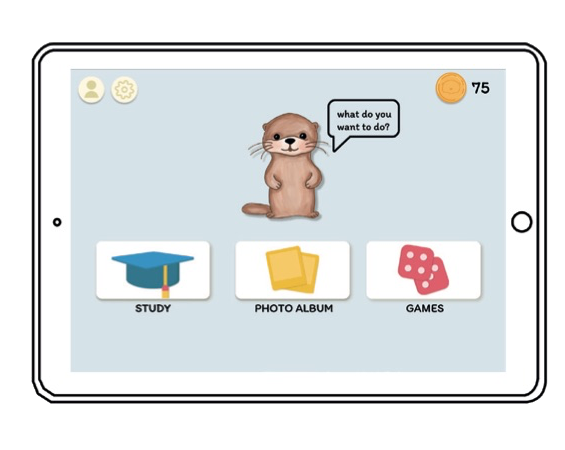 02 — First prototype in Figma
-
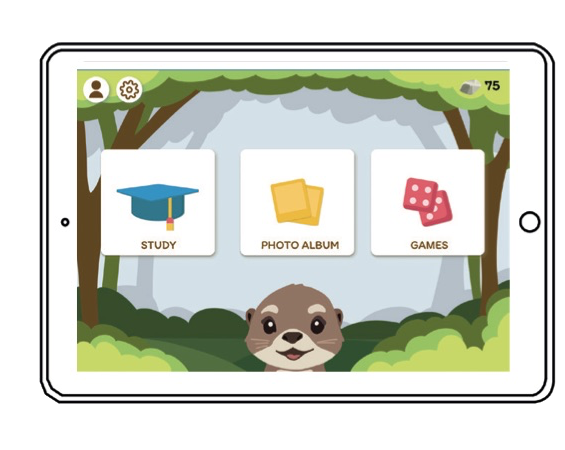 03 — Final screen design
Hi-Fi Prototype
The high-fidelity prototype showcases the app’s design and functionality and gives a clear, interactive representation of the user experience: three areas – Study, Photo Album and Games – guided by Otto.
Product Film
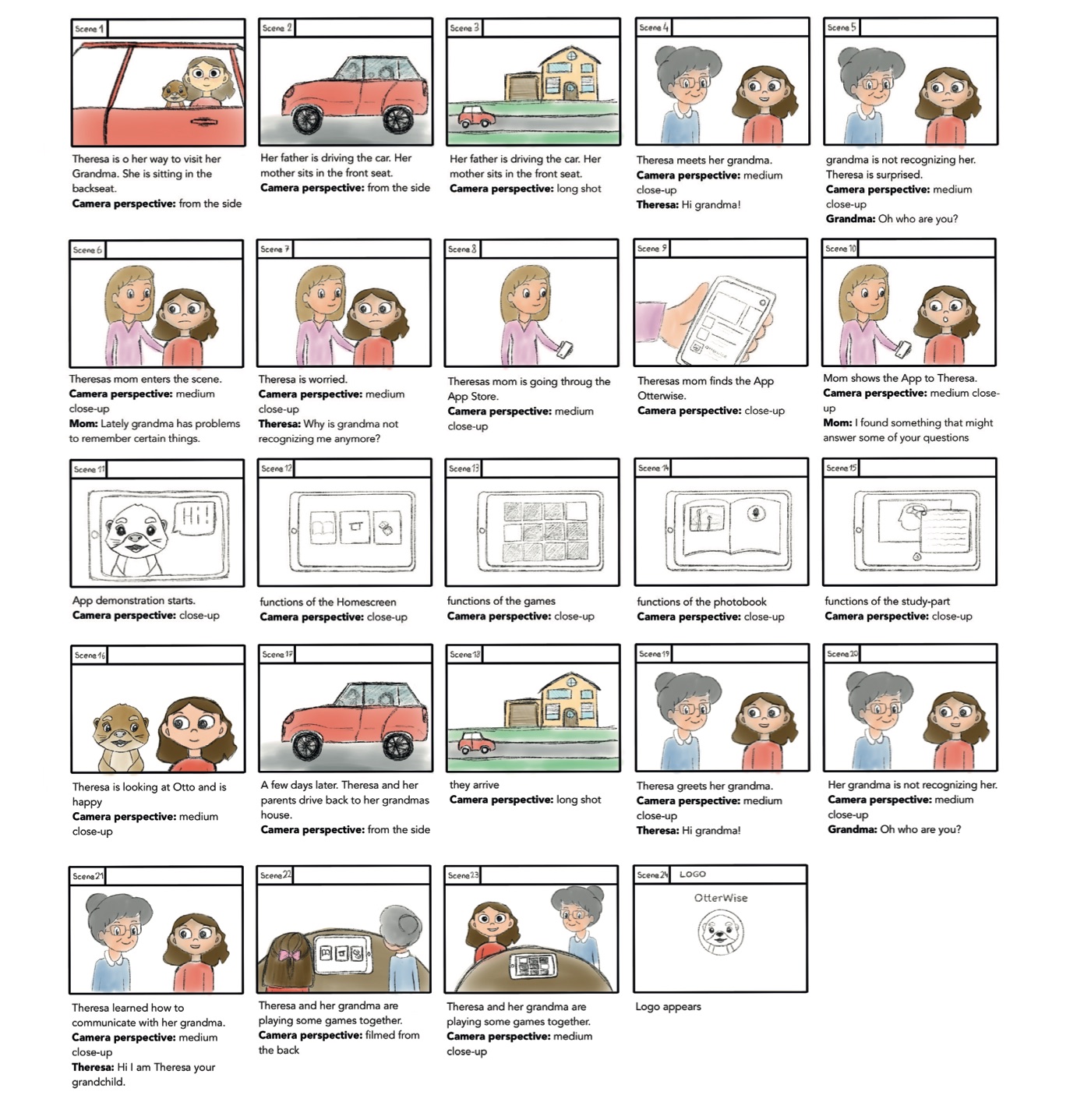
For the product film we planned every scene in a detailed storyboard, defining flow, perspectives and key details. The puppet was designed in Illustrator and animated in Adobe Character Animator, using motion capture and voice synchronisation.
Special thanks to Anelise Golin Stampfer